
How to Prevent Dry Socket: 7 Essential Tips After Wisdom Teeth Removal

First 7 Signs Your Wisdom Teeth Are Coming In (And What to Do Next)
January 19, 2026
How Long Does It Take to Recover From Wisdom Teeth Removal?
March 23, 2026
Dry socket is one of the more miserable bumps in the road after an extraction, and most cases are avoidable. To prevent dry socket after removing wisdom teeth, the goal is simple: protect the blood clot that forms in the socket, keep the area clean without disturbing healing, and follow the instructions given by your dentist or oral surgeon.
TL;DR
- Leave the blood clot alone (especially on day one)
- Avoid smoking, vaping and nicotine
- Skip straws and any strong suction
- Choose soft foods and chew away from the site
- Keep your mouth clean gently, as directed
- Rest, manage swelling, and take medicines as prescribed
- Know the warning signs and call your dentist early
What is dry socket (and why can it happen after wisdom teeth removal)?
Dry socket (also called alveolar osteitis) happens when the blood clot in the socket doesn’t form properly or is dislodged, leaving bone and nerves exposed. It’s painful and tends to show up a few days after the extraction, rather than immediately.
Wisdom teeth removal can carry a higher risk because the extraction sites are often larger and harder to keep undisturbed, particularly for lower wisdom teeth.

First 24 hours after wisdom teeth removal: what to do straight away
The first day is mostly about clot protection. Avoid anything that “pulls” on the socket or washes it out. Skip mouth rinses and strenuous activity for the first 24 hours, then move to gentle saltwater rinses after that window.
A practical day-one checklist:
- Bite on the gauze as instructed to control bleeding.
- Keep your head slightly elevated when resting.
- Stick to cool, soft foods and plenty of water.
- Don’t swish, spit forcefully, or poke the socket with fingers or your tongue.
Tip 1: Protect the blood clot (the number one rule)
Treat the clot like a natural bandage. If it stays put, you’re well on your way.
How to do it:
- Don’t rinse vigorously on day one.
- Avoid crunchy bits (chips, nuts, seeds) that can jab or lodge in the wound.
- Brush the rest of your teeth carefully and keep bristles away from the socket until your clinician says it’s safe.
Tip 2: Avoid smoking, vaping and nicotine
Smoking is one of the strongest and most consistent risk factors for dry socket. Smokers have more than three times the odds of developing dry socket compared with non-smokers.
If quitting completely isn’t realistic in the short term, speak with your dentist or pharmacist about nicotine replacement options and timing, because nicotine itself can affect blood flow and healing.

Tip 3: Skip straws and anything that creates suction
Suction can tug at the clot. That includes straws, forceful sucking, and sometimes even vigorous use of certain drink bottles.
Simple workaround: drink from a cup and take small sips. If you’re using a sports bottle, keep the squeeze gentle and avoid creating a strong vacuum in your mouth.
Tip 4: Eat soft foods and chew away from the extraction site
Food choice isn’t about being delicate, it’s about keeping the socket undisturbed and avoiding sharp fragments.
Good options for the first couple of days:
- Yoghurt, smoothies eaten with a spoon (no straw), mashed veg, scrambled eggs, soups cooled to warm
- Pasta, soft rice, and flaky fish as comfort allows
Avoid:
- Hard, crunchy, or seedy foods that can get stuck in the wound.
Tip 5: Keep your mouth clean, but use a gentle approach
A clean mouth helps healing, yet overdoing it can set you back. Many aftercare leaflets recommend waiting 24 hours, then rinsing gently with warm salt water several times a day, especially after meals, taking care not to dislodge the clot.
A helpful technique is to let the liquid roll around the mouth lightly and then allow it to fall out, rather than spitting hard.
This is also a good place to mention salt water rinse after wisdom teeth removal: use it only in the way your clinician recommends, and stop if it increases bleeding or discomfort.
Tip 6: Rest, manage swelling, and take medications exactly as directed
Swelling and soreness are expected. Cold compresses can help early on. Sleeping propped up with an extra pillow may also reduce swelling.
For pain relief, follow the schedule you were given rather than waiting until pain is intense. If you were prescribed antibiotics, finish the course as directed.
Tip 7: Know what’s normal, and call your dentist early if it’s not
Dry socket pain often feels different: it can be severe, persistent, throbbing, and may radiate to the ear or eye on the same side, commonly appearing within 1 to 5 days after extraction. Bad breath or a bad taste can also occur.
Seek advice promptly if you have ongoing very bad pain, heavy bleeding, fever, or swelling that worsens rather than settling.
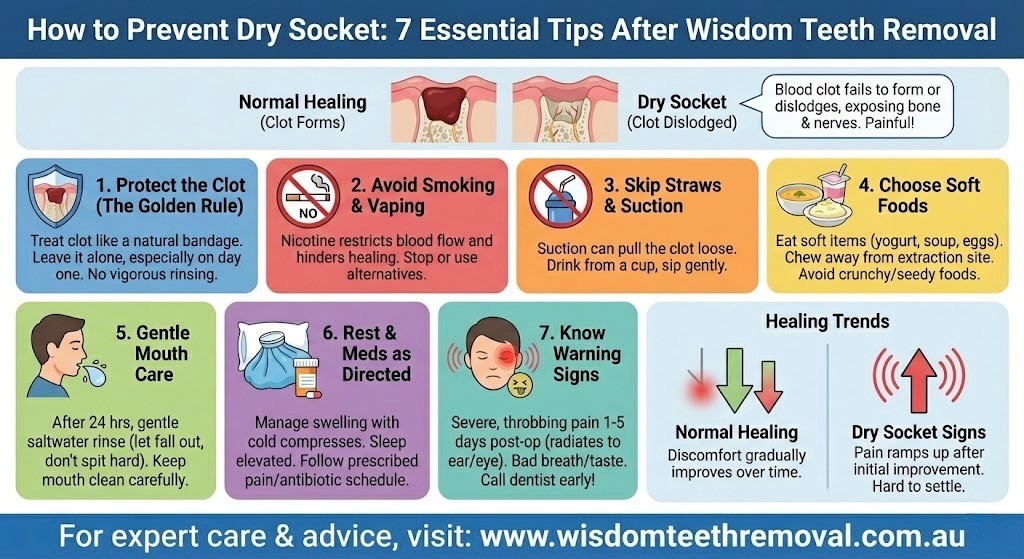
Signs of dry socket vs normal healing
Normal healing usually trends in one direction: discomfort gradually improves, swelling peaks and then eases, and you can eat a bit more each day.
Dry socket often goes the other way: pain ramps up after an initial improvement, the socket may look empty, and the pain can be hard to settle with standard pain relief.
Also Read: The Real Cost of Wisdom Teeth Removal in Sydney: Navigating Fees, Rebates, and Savings
Frequently Asked Questions:
1. How long is the risk of dry socket after wisdom teeth removal?
Dry socket most often shows up a few days after an extraction, commonly within about 1 to 5 days. After the first week, the risk usually drops as the socket begins to stabilise and the gum tissue starts closing over. If pain suddenly worsens after improving, contact your dentist.
2. Can drinking water cause dry socket?
Plain water won’t cause dry socket. The issue is suction and force, not hydration. Drink normally from a cup, take small sips, and avoid straws early on because suction can dislodge the clot. Staying well hydrated is generally supportive of recovery.
3. When can I use a straw again after wisdom teeth removal?
Many aftercare instructions advise avoiding straws in the early healing phase because suction can disturb the clot. A safe timeline varies by person and the type of extraction, so use your dentist’s advice. If you want a rule of thumb, wait until you’re eating comfortably and your clinician says the site is stable.
4. What are the most common signs of dry socket?
Typical signs include severe, persistent throbbing pain starting within 1 to 5 days after the extraction, a bad taste or bad breath, and an “empty looking” socket where the clot is missing and bone may be visible. If these symptoms appear, call your dentist for assessment and relief.
5. Can dry socket heal on its own, or do I need treatment?
It can settle over time, but it’s often needlessly painful to wait it out. Clinical care may include irrigating the socket to remove debris and placing a soothing dressing to reduce pain while healing continues. If your pain is intense or worsening, it’s sensible to be seen.