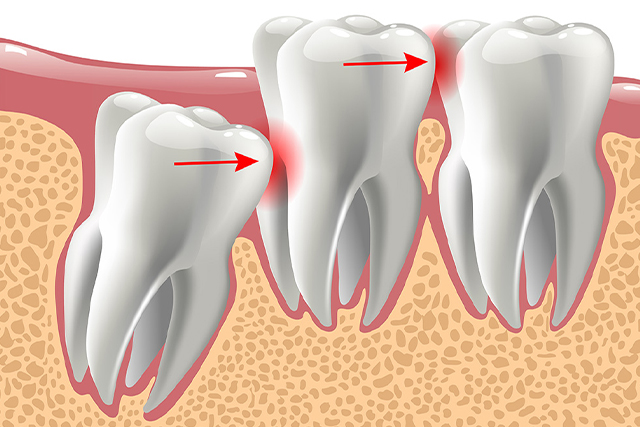
Wisdom teeth, those mysterious molars that often make their appearance during young adulthood, have long puzzled both patients and dentists alike. Why do we have them? And when should they be removed, if at all? In this blog, we’ll delve into the intriguing world of wisdom teeth, wisdom teeth removal, exploring their evolutionary origins, their potential purposes, and the factors that influence whether they should stay or go.
The Evolutionary Story:
To understand why we have wisdom teeth, we need to take a journey back through evolutionary history. Our early ancestors had larger jaws and diets that consisted of coarse, tough foods like roots, nuts, and raw meat. These foods required more chewing power, and the extra molars—our wisdom teeth—likely provided the necessary assistance.
However, as human diets evolved and became softer and more refined, the need for these extra teeth diminished. But evolution is a slow process, and our bodies haven’t caught up yet. As a result, many people today still develop wisdom teeth, even though they may not serve a functional purpose in the modern diet. That’s when dentist today offer wisdom teeth removal near me.
The Purpose of Wisdom Teeth:
While the evolutionary explanation provides some insight into why we have wisdom teeth, their exact purpose remains somewhat elusive. Some researchers suggest that these extra molars may have served as replacements for teeth that were lost early in life due to decay or wear. Others propose that they acted as a backup set of teeth, ready to step in if the primary molars were damaged or lost.
Another theory posits that wisdom teeth played a role in helping our ancestors grind and chew tough foods, especially during times of scarcity when food was harder to come by. However, as our diets changed and our jaws became smaller, the need for these extra teeth diminished.
Today, wisdom teeth often cause more problems than they solve. Due to their late eruption and limited space in the jaw, they can become impacted, leading to pain, infection, and other dental issues. This is when wisdom teeth removal is recommended.
When to Remove Wisdom Teeth:
The decision to opt for wisdom teeth removal near me is not always straightforward and depends on various factors, including the individual’s age, oral health, and the position of the teeth. While some people may never experience any problems with their wisdom teeth, others may develop issues that necessitate their removal.
- One common reason for wisdom teeth extraction is impaction, where the teeth are unable to fully emerge from the gums due to lack of space. Impacted wisdom teeth can cause pain, swelling, and infection, and may also damage adjacent teeth or cause crowding in the mouth. This also influences the wisdom teeth removal cost.
- Another indication for wisdom teeth removal is when they are causing or at risk of causing damage to neighbouring teeth or structures. For example, wisdom teeth that grow at an angle or in a crowded position can push against other teeth, leading to misalignment or even tooth damage. This will be considered when deciding on wisdom teeth removal price.
- Additionally, wisdom teeth that are partially erupted can be difficult to clean properly, increasing the risk of tooth decay, gum disease, and infection. In such cases, removal may be recommended to prevent future oral health problems.
- The timing of wisdom teeth removal is also important. In many cases, it’s best to remove them during the late teenage years or early twenties, before the roots are fully formed and the surrounding bone is denser. This can make the extraction process easier and reduce the risk of complications. More complexities would only increase the wisdom teeth removal cost. And once the removal is complete, be sure to diligently follow the wisdom teeth removal recovery tips from your dentist.
However, some individuals may not experience problems with their wisdom teeth until later in life. In such cases, removal may still be necessary, but the procedure may be more complex due to factors like root development and bone density.
Conclusion:
Wisdom teeth, while intriguing from an evolutionary perspective, often pose more problems than they solve in the modern world. While some people may never need to have their wisdom teeth removed, others may experience pain, infection, and other issues that necessitate extraction.
Ultimately, the decision to remove wisdom teeth should be made in consultation with a dental professional, considering factors like the individual’s age, oral health, and the position of the teeth. They will also determine the applicable wisdom teeth removal price. By understanding the evolutionary origins of wisdom teeth and the potential problems they can cause, we can make more informed decisions about their removal and ensure optimal oral health for years to come. If you have any questions on the procedure and wisdom teeth removal recovery, talk to a dentist today.