Wisdom teeth removal is common, but recovery can feel longer than expected when swelling, tenderness and food restrictions get in the way of normal life. Most people feel better within several days, although gum healing and deeper tissue repair take longer. The safest way to recover faster is not to rush the process, but to protect the blood clot, reduce irritation and follow the advice given after surgery.
Key Takeaway
You can shorten discomfort after wisdom teeth removal by resting properly, controlling swelling, eating soft nourishing foods, keeping your mouth clean without disturbing the socket, and avoiding smoking, straws and alcohol. These steps reduce the risk of dry socket, infection and delayed healing.
Experts also advise avoiding rinsing, spitting, mouthwash and brushing directly near the surgical area during the first 24 hours unless your dentist tells you otherwise.
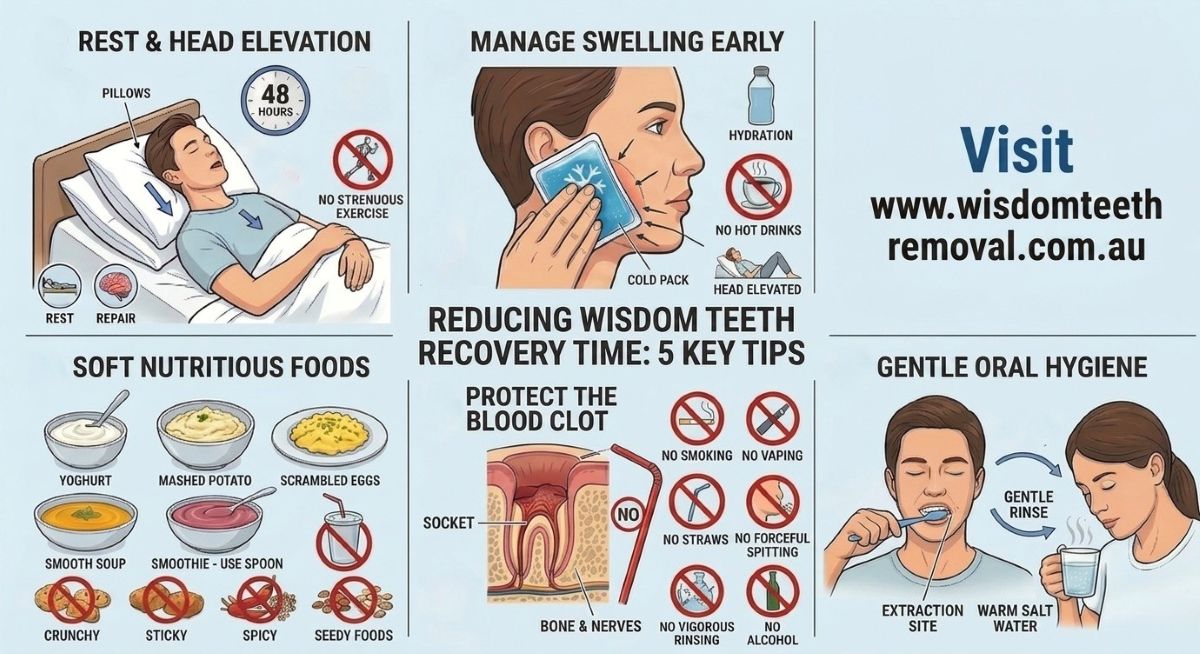
Reducing Wisdom Teeth Recovery Time – 5 Tips that work
1. Rest properly for the first two days
Your body does a lot of repair work in the first 48 hours. Heavy exercise, lifting, bending and rushing back to a full schedule can increase bleeding and swelling. Keep your head slightly raised when resting, and take things quietly.
Helpful steps include:
- Plan a low-activity day after surgery.
- Avoid intense exercise until your dentist clears you.
- Sleep with your head supported.
- Do not poke the area with your tongue or fingers.
A quiet couple of days can save you from a drawn-out recovery later.
2. Manage swelling early
Swelling is a normal response after wisdom tooth extraction, especially if the teeth were impacted. Cold packs can help during the early stage. Use them on the outside of the cheek as instructed by your dental team, usually in short intervals rather than continuously.
You can also help swelling by:
- Keeping your head raised.
- Drinking enough water.
- Avoiding hot drinks in the first day.
- Staying away from strenuous activity.
Swelling that keeps getting worse after several days is not something to ignore. It may simply be delayed inflammation, but it can also suggest infection.

3. Choose soft foods that still nourish you
Eating well is harder when chewing hurts, but skipping meals can leave you tired and slow healing. Start with soft, cool or lukewarm foods that do not need much chewing.
Good choices include:
- Yoghurt
- Mashed potato
- Scrambled eggs
- Smooth soups
- Porridge
- Applesauce
- Avocado
- Soft pasta
- Protein smoothies eaten with a spoon
Avoid crunchy, sticky, spicy or seedy foods because they can irritate the socket or leave small pieces trapped near the wound. Do not use a straw for smoothies, as suction may disturb the clot.
4. Protect the blood clot
The blood clot is the body’s natural dressing over the extraction site. If it comes loose too early, the bone and nerves underneath can become exposed, which may lead to dry socket. Cleveland Clinic notes that suction from straws can dislodge the clot and recommends skipping straws for at least a week.
To protect the clot:
- Do not smoke or vape.
- Avoid drinking through straws.
- Do not spit forcefully.
- Avoid vigorous rinsing.
- Skip alcohol while healing.
- Follow medication instructions carefully.
Smoking is one of the biggest avoidable risks. Infection and delayed healing are more likely if you smoke during recovery.
5. Keep your mouth clean, gently
A clean mouth lowers the chance of infection, but aggressive brushing or rinsing can cause problems. During the first 24 hours, follow the exact instructions from your dentist. After that, many patients are advised to rinse gently with warm salt water, especially after meals.
A simple routine may include:
- Brush the other teeth carefully.
- Avoid brushing directly over the socket at first.
- Let salt water roll gently around the mouth.
- Do not swish hard.
- Keep food debris away from the area.
Your wisdom teeth extraction dentist may give you extra instructions if your extraction was surgical, involved stitches or included impacted teeth.
Wisdom teeth recovery timeline: What usually happens?
A simple wisdom teeth removal recovery timeline often looks like this:
- First 24 hours: Blood clots form in the sockets. Mild bleeding, swelling and soreness are expected.
- Days 2 to 3: Swelling and jaw stiffness may peak. This is often when patients feel most uncomfortable.
- Days 4 to 7: Pain should begin to ease. Many people return to work, study or light routines.
- After one week: Gum healing is usually well underway, though deeper healing continues.
- Two weeks and beyond: Most swelling and bruising should settle, depending on how complex the extraction was.
If pain suddenly worsens after a few days, especially with a bad taste or odour, contact a dentist. Dry socket can cause increasing pain around three to five days after an extraction and may need professional care.
For a more detailed breakdown of what happens day by day, see How Long Does It Take to Recover From Wisdom Teeth Removal?.
When should you call a dentist?
Seek dental advice if you notice:
- Severe pain that gets worse after day three
- Heavy or repeated bleeding
- Fever
- Pus near the socket
- Bad taste or bad breath that does not improve
- Swelling that spreads or worsens
- Trouble swallowing or breathing
- Pain that does not respond to medicine
These signs do not always mean something serious, but they deserve prompt attention.
Frequently Asked Questions
How long does wisdom teeth recovery take?
Many people feel noticeably better within three to seven days. More complex removals may take longer, and full tissue healing can continue for weeks.
What helps wisdom teeth heal faster?
Rest, soft foods, gentle cleaning, enough fluids and avoiding smoking or straws all support healing. The aim is to prevent irritation and protect the clot.
What is the worst day after wisdom teeth removal?
For many patients, discomfort and swelling peak around days two or three. Symptoms should then slowly settle rather than become worse.
Can I go back to work after wisdom teeth removal?
Some people return after a couple of days, especially after a simple extraction. If the removal was surgical or you need strong pain relief, you may need more time.
How do I prevent dry socket?
Avoid smoking, vaping, straws, forceful rinsing and touching the socket. Keep the area clean as advised, and contact your dentist if pain suddenly increases.
Recovering well starts with the right advice before and after your procedure. Book a free consultation with Wisdom Teeth Professionals for personalised care and post-procedure support.